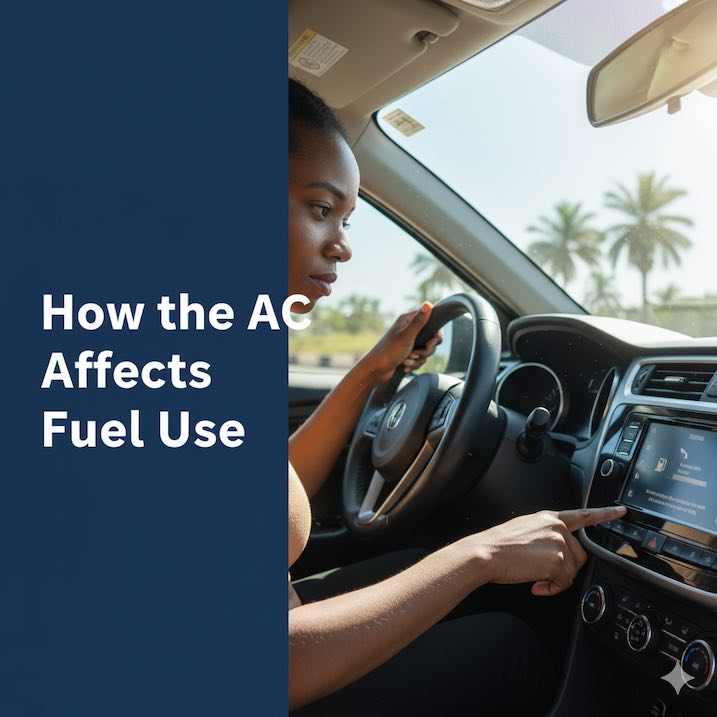
The short answer: Yes, air conditioning (AC) does increase fuel consumption, but how much depends on several factors — your car type, engine size, driving conditions, and how efficiently you use the AC.
How the AC Affects Fuel Use
When you switch on the AC, the compressor — powered by the car's engine — starts working to cool and circulate air. This adds an extra load on the engine, forcing it to work harder and burn more fuel.
Typical figures:
That might not sound like much, but in Nairobi's stop-and-go traffic, that extra load adds up over time — especially for daily commuters and ride-hailing drivers.
Factors That Influence AC Fuel Usage
-
Car Type & Engine Size
Smaller engines feel the impact more because they have less power to spare. A 1.3L Vitz will lose more efficiency compared to a 3.0L Prado under the same conditions.
-
Driving Speed
-
Temperature Settings
The lower (colder) you set your AC, the harder the compressor must work — meaning more fuel use.
-
Cabin Heat and Sunlight
On hot days, your car's interior can reach up to 60°C when parked in the sun. The AC has to work extra hard to cool that heat down. Using sunshades or parking under shade helps.
-
AC Maintenance
A poorly maintained AC system (e.g., low refrigerant, clogged filters, or dirty condenser) forces the compressor to work harder — consuming more fuel.
AC vs. Open Windows — Which Is Better?
This is a classic question.
-
At low speeds (below 80 km/h):
It's more fuel-efficient to open your windows instead of using AC.
-
At high speeds (above 80 km/h):
Open windows create aerodynamic drag, which increases fuel consumption — often more than what AC would use.
So, on highways, AC is actually more efficient than open windows.
Tips to Reduce AC-Related Fuel Use
-
Park in shaded areas or use windshield covers to reduce cabin heat.
-
Use your car's "recirculate" mode — it cools faster and uses less energy.
-
Don't blast AC immediately after starting the car; drive for a minute first.
-
Maintain your AC system — clean filters, check refrigerant, and service regularly.
-
Avoid setting the temperature to the lowest setting; 22–24°C is usually enough.
Verdict
Using AC does increase fuel consumption — but not drastically if used wisely.
For Kenyan conditions — where dust, heat, and traffic are common — a well-maintained AC system used moderately is the smart choice for comfort without wasting too much fuel.


0 Comments:
Post a Comment
Subscribe to Post Comments [Atom]
<< Home